

TheBankTodayTheBankTodayTheBankToday
Notification Show More
Font ResizerAa
  • Home
  • Banking
  • SBI
  • ATM Card
  • NEFT/UPI
  • Central Bank
  • Important
Reading: EPF Partial Withdrawal Rules now have 3 Simple Categories
Share
Font ResizerAa
TheBankTodayTheBankToday
  • Home
  • Banking
  • SBI
  • ATM Card
  • NEFT/UPI
  • Central Bank
  • Important
Search
  • Home
  • Banking
  • SBI
  • ATM Card
  • NEFT/UPI
  • Central Bank
  • Important
Have an existing account? Sign In
Follow US

Home » EPF

epfo1
EPF

EPF Partial Withdrawal Rules now have 3 Simple Categories

Takendra Verma
Last updated: 12/09/2026 2:16 PM
Takendra Verma
Published: 12/09/2026
Share
SHARE

EPF partial withdrawal rules have been simplified under the latest EPFO framework, bringing different withdrawal provisions under three broad categories.

Contents
 EPF Partial Withdrawal Rules Have Three Categories Essential Needs Cover Medical and Family ExpensesHousing Needs Remain a Separate Category Special Circumstances Cover Exceptional Needs

These are essential needs, housing needs and special circumstances, making it easier for employees to understand when they can access their provident fund savings.

 EPF Partial Withdrawal Rules Have Three Categories

The Employees’ Provident Fund Organisation has grouped several earlier withdrawal provisions into three broad categories.

The move is aimed at simplifying the process for members who need to withdraw part of their PF savings for specific purposes.

The three categories are essential needs, housing needs and special circumstances.

The new structure covers requirements such as illness, education and marriage, along with housing-related expenses and certain exceptional situations.

 Essential Needs Cover Medical and Family Expenses

The essential needs category covers important personal and family requirements.

These include medical treatment, education and marriage-related expenses, subject to the applicable EPFO conditions and withdrawal limits.

The revised framework also provides different withdrawal frequencies depending on the purpose.

For example, recent guidance says illness-related withdrawals can be made repeatedly, while education and marriage withdrawals have specified limits.

This means members should check the specific eligibility conditions before submitting a claim rather than assuming that every expense qualifies for the same withdrawal amount.

Housing Needs Remain a Separate Category

Housing-related withdrawals have been placed in a separate category.

Members can use the applicable EPF advance provisions for purposes such as buying or constructing a house and certain home-loan-related requirements.

The separate housing category is intended to make these provisions easier to identify.

However, eligibility, service requirements and the permitted withdrawal amount depend on the particular housing purpose and the applicable rules.

 Special Circumstances Cover Exceptional Needs

The third category is special circumstances. It provides a framework for withdrawals in situations that do not fall neatly under ordinary essential or housing requirements.

The simplified classification does not mean that members can withdraw their entire PF balance whenever required.

Recent explanations of the revised rules indicate that members generally need to retain at least 25% of the eligible EPF balance, helping protect a portion of the retirement corpus.

The revised approach therefore attempts to balance easier access to PF savings with the need to preserve money for retirement.

Employees should check their eligibility and the applicable limit before making a partial withdrawal claim.


You Might Also Like

EPFO introduces UPI-Based PF Withdrawal System
EPFO’s New 2.01 Platform makes UAN Recovery Easy
EPFO may Reduce Interest Rate soon
EPFO Now Covers Foreign Employees Working in India
EPS Pension Hike Explained (Benefits and Eligibility)
Share This Article
Facebook Email Print
Leave a Comment

Leave a Reply Cancel reply

Your email address will not be published. Required fields are marked *

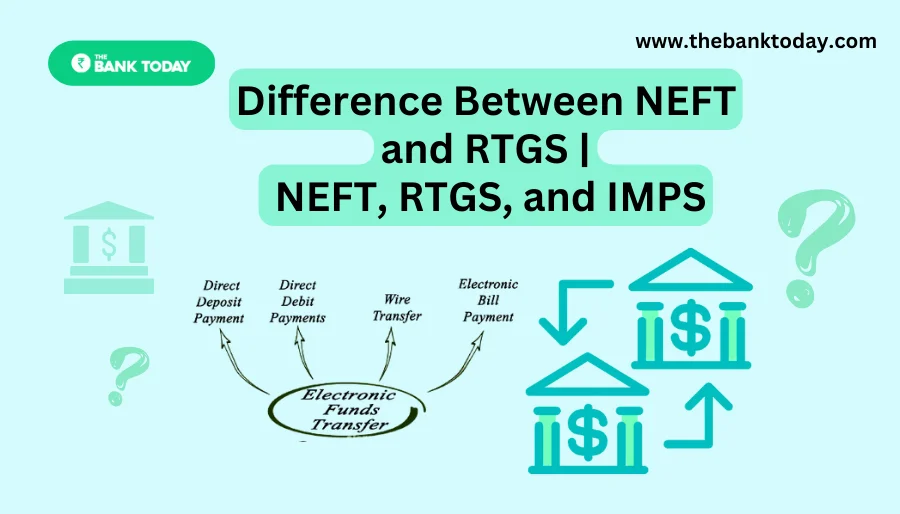
Difference Between NEFT and RTGS

Get Banking Updates

Important banking and money updates, delivered without the clutter.
Thank you! Please check your inbox to confirm your subscription.
Popular Updates
SBI Asha Scholarship
SBI Asha Scholarship 2023: विद्यार्थियों को मिल रही 5 लाख की स्कॉलरशिप
31/07/2023
fd
RBI Changes FD Interest Rate Rules From October 1
22/09/2026
How to register YONO SBI
How to register YONO SBI in Just 5 minutes
11/05/2023
check balance from SBI ATM
How to check Balance from SBI ATM?
30/07/2023
How to check Balance in SBI
How to check Balance in SBI in 2023?
18/02/2023

Tags

  • Central Bank Of India
  • Pan Card
  • register mobile number
  • pan card new rule
  • Banking Service
  • HDFC
  • SBI Personal Loan
  • Net Banking
  • Activate Net Banking
  • What is Bank?

TheBankToday

TheBankToday publishes practical banking, personal-finance and financial-news explainers to help readers understand important updates and services.
Quick Links
  • About
  • Contact Us
  • Disclaimer
  • Join Us
  • T&C
  • Privacy Policy
  • Customize Interests
Important Links
  • Advertise With Us
  • Advertising Policy
  • Cookie Policy
  • Corrections Policy
  • Editorial Policy
  • Fact-Checking Policy
  • Grievance Redressal

Subscribe Us

Subscribe to our newsletter to get our newest articles instantly!

Thank you! Please check your inbox to confirm your subscription.
© 2026 TheBankToday. All Rights Reserved.
Welcome Back!

Sign in to your account

Username or Email Address
Password

Lost your password?