

TheBankTodayTheBankTodayTheBankToday
Notification Show More
Font ResizerAa
  • Home
  • Banking
  • SBI
  • ATM Card
  • NEFT/UPI
  • Central Bank
  • Important
Reading: What’s changing in Aadhaar Face Authentication
Share
Font ResizerAa
TheBankTodayTheBankToday
  • Home
  • Banking
  • SBI
  • ATM Card
  • NEFT/UPI
  • Central Bank
  • Important
Search
  • Home
  • Banking
  • SBI
  • ATM Card
  • NEFT/UPI
  • Central Bank
  • Important
Have an existing account? Sign In
Follow US

Home » Important

Aadhaar Card Logo result
Important

What’s changing in Aadhaar Face Authentication

Takendra Verma
Last updated: 16/12/2025 4:56 PM
Takendra Verma
Published: 16/12/2025
Share
SHARE

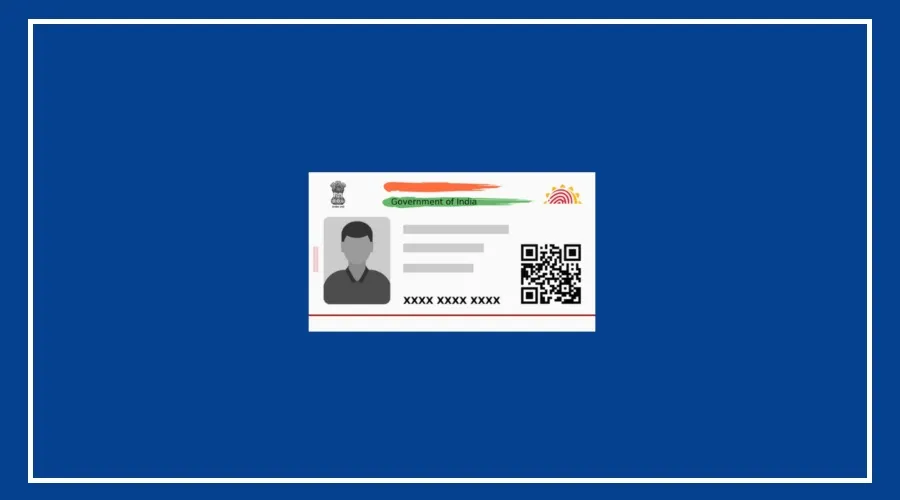
The government has notified new Aadhaar rules that allow face authentication while putting stronger limits on how Aadhaar data can be used.

Contents
What Do the New Aadhaar Rules Change?Why Face Authentication MattersStronger Privacy and Consent ControlsBringing Private Aadhaar Use Into the Legal FrameworkHow the New Aadhaar App Fits In

These changes align with the Digital Personal Data Protection (DPDP) Act and clearly define how both government bodies and private companies can access Aadhaar legally.

The update signals a major shift in Aadhaar’s role beyond welfare schemes, especially as UIDAI prepares to launch a redesigned Aadhaar app for everyday identity checks.

What Do the New Aadhaar Rules Change?

The new rules officially recognise face authentication as a valid Aadhaar verification method, alongside fingerprints, iris scans and OTPs.

Earlier, facial verification was used only in limited government cases and lacked formal legal backing.

The rules also strengthen offline Aadhaar verification, allowing identity checks without connecting to UIDAI’s central database.

Users can now share digitally signed details through QR codes or mobile apps, making verification faster and safer.

Why Face Authentication Matters

Face authentication is useful where fingerprints or iris scans do not work well, or where organisations do not qualify as full Aadhaar Authentication User Agencies.

UIDAI says on-device face verification can act as a proof of presence, confirming that the Aadhaar holder is physically present at the location.

Importantly, biometric data does not need to be sent to UIDAI servers.

This opens the door for use cases such as event entry, hotel check-ins, gated communities and ticketed venues, similar to DigiYatra-style checks but beyond airports.

Stronger Privacy and Consent Controls

The rules place clear limits on Aadhaar use. Every request must be:

Purpose-specific

Based on explicit user consent

Restricted to minimum required data

This follows the DPDP Act, which aims to prevent data misuse and over-collection.

Aadhaar holders can approve or reject requests and share only selected details, such as age or photograph, instead of their full Aadhaar profile.

Bringing Private Aadhaar Use Into the Legal Framework

The government is also addressing a long-standing grey area in private-sector Aadhaar usage.

UIDAI has flagged that some businesses illegally accessed Aadhaar details through OTP-based logins.

By formally allowing offline verification, the new rules reduce the need for such workarounds and bring private Aadhaar use under clear legal boundaries.

How the New Aadhaar App Fits In

UIDAI officials say the upcoming Aadhaar app will put these rule changes into action.

The app will store Aadhaar credentials on the user’s device, support selective sharing via QR codes, and enable offline face-based verification.

This approach gives users more control over their data while making Aadhaar safer and more practical for everyday identity checks.


You Might Also Like

Check If your City has Holiday today
RBI Introduces New Guidelines for CIBIL Score
Garware Technical Fibres announces Bonus Shares (Price Band)
Aadhaar Link with ESIC Pehchan Card now Mandatory
Top Banks offering High FD Interest to Seniors
Share This Article
Facebook Email Print
Leave a Comment

Leave a Reply Cancel reply

Your email address will not be published. Required fields are marked *

Difference Between NEFT and RTGS

Get Banking Updates

Important banking and money updates, delivered without the clutter.
Thank you! Please check your inbox to confirm your subscription.
Popular Updates
SBI Asha Scholarship
SBI Asha Scholarship 2023: विद्यार्थियों को मिल रही 5 लाख की स्कॉलरशिप
31/07/2023
fd
RBI Changes FD Interest Rate Rules From October 1
22/09/2026
How to register YONO SBI
How to register YONO SBI in Just 5 minutes
11/05/2023
check balance from SBI ATM
How to check Balance from SBI ATM?
30/07/2023
How to check Balance in SBI
How to check Balance in SBI in 2023?
18/02/2023

Tags

  • Central Bank Of India
  • Pan Card
  • register mobile number
  • pan card new rule
  • Banking Service
  • HDFC
  • SBI Personal Loan
  • Net Banking
  • Activate Net Banking
  • What is Bank?

TheBankToday

TheBankToday publishes practical banking, personal-finance and financial-news explainers to help readers understand important updates and services.
Quick Links
  • About
  • Contact Us
  • Disclaimer
  • Join Us
  • T&C
  • Privacy Policy
  • Customize Interests
Important Links
  • Advertise With Us
  • Advertising Policy
  • Cookie Policy
  • Corrections Policy
  • Editorial Policy
  • Fact-Checking Policy
  • Grievance Redressal

Subscribe Us

Subscribe to our newsletter to get our newest articles instantly!

Thank you! Please check your inbox to confirm your subscription.
© 2026 TheBankToday. All Rights Reserved.
Welcome Back!

Sign in to your account

Username or Email Address
Password

Lost your password?