

TheBankTodayTheBankTodayTheBankToday
Notification Show More
Font ResizerAa
  • Home
  • Banking
  • SBI
  • ATM Card
  • NEFT/UPI
  • Central Bank
  • Important
Reading: New PF Rules: TDS Saving Forms no Longer Work
Share
Font ResizerAa
TheBankTodayTheBankToday
  • Home
  • Banking
  • SBI
  • ATM Card
  • NEFT/UPI
  • Central Bank
  • Important
Search
  • Home
  • Banking
  • SBI
  • ATM Card
  • NEFT/UPI
  • Central Bank
  • Important
Have an existing account? Sign In
Follow US

Home » EPF

EPFO result
EPF

New PF Rules: TDS Saving Forms no Longer Work

Takendra Verma
Last updated: 16/04/2026 1:06 PM
Takendra Verma
Published: 16/04/2026
Share
SHARE

PF account holders need to pay attention to a key tax rule update.

The Employees’ Provident Fund Organisation (EPFO) has changed the process for Tax Deducted at Source (TDS) relief during PF withdrawals.

Old forms used for this purpose—Form 15G and Form 15H—are no longer valid.

They have now been replaced with a new Form 121, effective from April 1.

This change is meant to simplify the system, but it also introduces new conditions that taxpayers must understand carefully.

What Has Changed in PF Tax Rules?

Earlier, individuals below 60 years of age used Form 15G, while senior citizens used Form 15H to avoid TDS deductions on PF withdrawals.

Now, both of these forms have been replaced by a single document—Form 121.

According to EPFO’s latest circular issued on April 13, Form 121 will only be accepted from individuals whose estimated annual tax liability is zero.

In simple terms, this means the person’s total yearly income must fall below the taxable limit.

However, this benefit is not available to everyone.

Companies, firms, and Non-Resident Indians (NRIs) are not allowed to submit this form.

Who Can Use Form 121?

EPFO has clarified that Form 121 is not mandatory for all PF account holders.

It is only required for those who want to avoid TDS deduction at the time of withdrawal.

If your income is below the tax exemption limit and you do not owe any tax for the financial year, you can submit this form to claim PF withdrawals without TDS.

Even if someone accidentally submits the old forms after April 1, EPFO has said they will not be rejected immediately.

The system will still proceed with collecting the new Form 121 from the employee.

Understanding EPF in Simple Terms

The Employees’ Provident Fund (EPF) is a government-backed savings scheme for salaried employees in the private sector.

Under this system, employees contribute 12% of their basic salary every month, and employers contribute an equal amount.

From the employer’s share, 8.33% goes into the Employees’ Pension Scheme (EPS), while the remaining amount goes into the PF account.

The deposited money earns interest over time, making EPF a long-term savings tool for retirement security.


You Might Also Like

UAN Activation Deadline Extended to 30 June 2025
PF Account Merge made easy under EPFO 3.0
Easy PF Withdrawal via ATM
EPFO launches WhatsApp Service to Check PF Balance
EPFO 2.01 makes PF Management easier (Full Details Inside)
Share This Article
Facebook Email Print
Leave a Comment

Leave a Reply Cancel reply

Your email address will not be published. Required fields are marked *

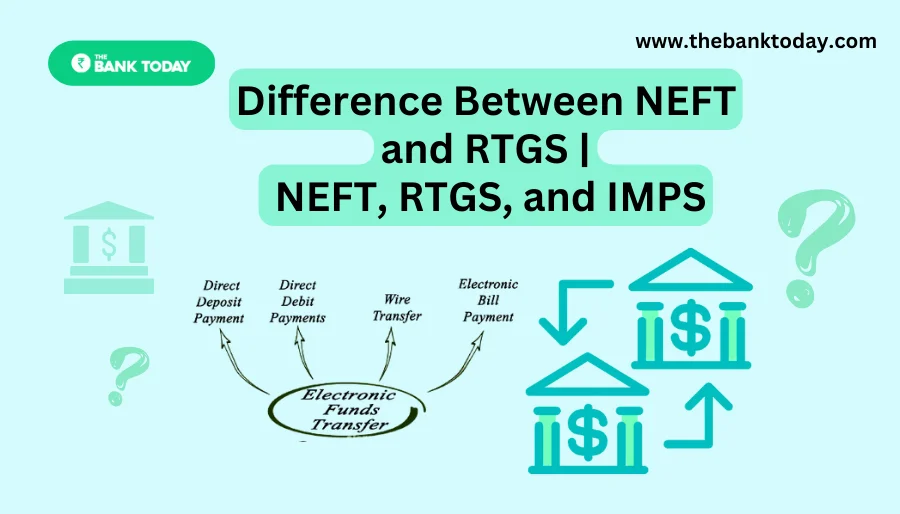
Difference Between NEFT and RTGS

Get Banking Updates

Important banking and money updates, delivered without the clutter.
Thank you! Please check your inbox to confirm your subscription.
Popular Updates
SBI Asha Scholarship
SBI Asha Scholarship 2023: विद्यार्थियों को मिल रही 5 लाख की स्कॉलरशिप
31/07/2023
fd
RBI Changes FD Interest Rate Rules From October 1
22/09/2026
How to register YONO SBI
How to register YONO SBI in Just 5 minutes
11/05/2023
check balance from SBI ATM
How to check Balance from SBI ATM?
30/07/2023
How to check Balance in SBI
How to check Balance in SBI in 2023?
18/02/2023

Tags

  • Central Bank Of India
  • Pan Card
  • register mobile number
  • pan card new rule
  • Banking Service
  • HDFC
  • SBI Personal Loan
  • Net Banking
  • Activate Net Banking
  • What is Bank?

TheBankToday

TheBankToday publishes practical banking, personal-finance and financial-news explainers to help readers understand important updates and services.
Quick Links
  • About
  • Contact Us
  • Disclaimer
  • Join Us
  • T&C
  • Privacy Policy
  • Customize Interests
Important Links
  • Advertise With Us
  • Advertising Policy
  • Cookie Policy
  • Corrections Policy
  • Editorial Policy
  • Fact-Checking Policy
  • Grievance Redressal

Subscribe Us

Subscribe to our newsletter to get our newest articles instantly!

Thank you! Please check your inbox to confirm your subscription.
© 2026 TheBankToday. All Rights Reserved.
Welcome Back!

Sign in to your account

Username or Email Address
Password

Lost your password?