
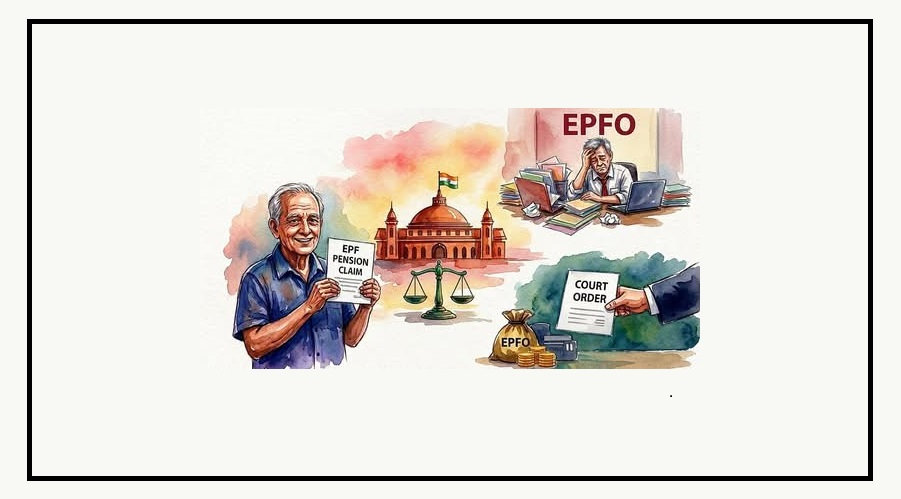

Millions of EPS-95 pensioners across India may soon get a pension increase as the government is reportedly reviewing a proposal to raise the minimum monthly pension under the Employees’ Pension Scheme (EPS).
At present, the minimum EPS pension is ₹1,000 per month. According to reports, the Labour Ministry and EPFO are considering increasing it to anywhere between ₹1,500 and ₹3,000.
Some pensioner groups are even demanding a minimum pension of ₹5,000 or ₹7,500 along with Dearness Allowance (DA).
The proposed increase is aimed at helping retired employees deal with rising inflation, healthcare expenses, and higher living costs.
Who Is Eligible for EPS Pension?
To receive pension benefits under EPS, employees must meet certain conditions.
A person must:
Be a member of EPFO
Complete at least 10 years of service
Reach the age of 58 years for full pension
Employees can also choose early pension after the age of 50, but the pension amount becomes lower.
How EPS Pension Is Calculated
EPS pension is calculated using this formula:
Monthly Pension=Pensionable Salary×Pensionable Service70\text{Monthly Pension} = \frac{\text{Pensionable Salary} \times \text{Pensionable Service}}{70}
For employees retiring after September 2014, pensionable salary is calculated using the average basic salary and dearness allowance (DA) of the last 60 months.
Currently, the salary ceiling for EPS calculation is capped at ₹15,000.
Who Will Benefit the Most From the Pension Hike?
Reports suggest that employees currently receiving low pensions are likely to benefit the most if the minimum pension is increased to ₹3,000.
This mainly includes employees:
Earning between ₹10,000 and ₹14,000
Having around 10 to 14 years of service
Receiving pension below ₹3,000
For example:
An employee earning ₹10,000 with 10 years of service currently gets around ₹1,400–₹1,500 pension
Employees with 12–14 years of service may receive around ₹2,000–₹2,800
If the minimum pension is fixed at ₹3,000, these pensioners could see a major increase in monthly income.
However, retirees already receiving pensions above ₹3,000 may not see much additional benefit.
Why Pensioners Are Demanding an Increase
The current minimum EPS pension of ₹1,000 was introduced in 2014 and has not been revised for over 10 years.
Pensioner associations say the amount is no longer enough because of:
Inflation
Rising medical expenses
Increasing daily living costs
Dependence on savings and family support
This is why many employee unions and pension groups are demanding a higher guaranteed pension.
No Final Decision Yet
The government has not officially approved any pension increase so far.
Reports suggest multiple proposals are being examined, including:
₹1,500 minimum pension
₹2,000 minimum pension
₹2,500 minimum pension
₹3,000 minimum pension
Experts say a major hike may require:
Additional government support
Changes in EPFO funding
Higher contribution limits
Long-term adjustments to the EPS fund structure
Bigger EPS Reforms May Also Happen
Along with the pension hike, EPFO is reportedly considering several larger reforms under EPFO 3.0.
These may include:
Increasing the pensionable salary ceiling from ₹15,000 to ₹25,000
Expanding higher pension options
Launching digital pension services
If implemented, these changes could significantly improve retirement benefits for crores of salaried employees and pensioners across India.